I’ve tested a few CO2 lasers, and, for the best co2 laser cutting machine picks, I value wattage for speed and precision, so I lean toward 45W and up like the OMTech K40+ 45W or the xTool P2S 55W, plus the compact 50W 12×8 for desk setups.
Look for a good honeycomb bed, autofocus, and solid safety features, since these make precise cuts easier.
I’ll share practical tips and real-world results, and you’ll see why these choices make hobby work smoother, and more fun, than you expect.
| OMTech K40+ 45W CO2 Laser Engraver |  | Best Value | Type: CO2 laser cutter/engraver | Power: 45W | Bed Size: 12″ x 8″ | VIEW LATEST PRICE | Read Our Analysis |
| xTool P2S 55W CO2 Laser Cutter |  | Professional Grade | Type: CO2 laser cutter | Power: 55W | Bed Size: 26″ x 14″ | VIEW LATEST PRICE | Read Our Analysis |
| 50W CO2 Laser Engraver 12×8 Desktop | Precision Powerhouse | Type: CO2 laser engraver | Power: 50–60W | Bed Size: 12″ x 8″ | VIEW LATEST PRICE | Read Our Analysis | |
| xTool P2 55W CO2 Laser Cutter (Smart Desktop) |  | Safe Desktop Power | Type: CO2 laser cutter (Smart Desktop) | Power: 55W | Bed Size: 26″ x 14″ | VIEW LATEST PRICE | Read Our Analysis |
More Details on Our Top Picks
OMTech K40+ 45W CO2 Laser Engraver
If you want an affordable, capable CO2 laser, the OMTech K40+ 45W shines. I like that it can cut 10 mm acrylic and 8 mm wood, and that the speed improves by about 1.5 to 2x, while engraving tops out at 300 mm/s. This model fits my small projects with a 12 by 8 inch workspace and a honeycomb bed for flat materials. It works with wood, acrylic, and leather, and lets me adjust settings for better results. Software options like LightBurn and LaserGRBL feel smooth, and built-in safety features provide peace of mind every day.
- Type:CO2 laser cutter/engraver
- Power:45W
- Bed Size:12″ x 8″
- Safety/Enclosure:Enclosed with door protection, water protection, emergency stop
- Software Compatibility:LightBurn, LaserGRBL
- Material Capabilities:Wood, acrylic, leather
- Additional Feature:Detachable base
- Additional Feature:Rotary axis support
- Additional Feature:Auto air assist
xTool P2S 55W CO2 Laser Cutter
With the xTool P2S 55W CO2 Laser Cutter, cuts stay sharper thanks to stronger airflow. The upgraded hardware and software keep operations smooth, delivering faster engraving up to 600 mm/s and smart fill batch processing. Dual 16MP cameras provide clear previews, and LiDAR autofocus makes aiming easy. Its 26 by 14 inch bed handles large projects, and auto pass-through supports long pieces. Safety feels solid with AI fire detection and an automatic lock. For beginners, start with wood and acrylic and watch ideas become real—clean, precise crafts every time.
- Type:CO2 laser cutter
- Power:55W
- Bed Size:26″ x 14″
- Safety/Enclosure:Enclosed design with AI fire detection, emergency stop
- Software Compatibility:Updated hardware/software support (details not specified)
- Material Capabilities:Wood, metal, acrylic, glass, fabric, leather
- Additional Feature:Dual-cylinder air pump
- Additional Feature:LiDAR range system
- Additional Feature:Dual 16MP cameras
50W CO2 Laser Engraver 12×8 Desktop
This 50W CO2 Laser Engraver is perfect for beginners who want a sturdy desktop cutter. With a 12 by 8 inch engraving area, it fits small projects like wood coasters or acrylic charms. The laser delivers a steady 50W of power, with adjustable speed for different effects. High precision comes from a sturdy belt drive and precise stepper motor, giving 0.01 mm positioning and sharp lines up to 2500 dpi. Flexible software works with Windows and CorelDRAW formats, so you can load JPG or AI files easily. USB connectivity keeps it simple, with driver support.
- Type:CO2 laser engraver
- Power:50–60W
- Bed Size:12″ x 8″
- Safety/Enclosure:(Safety not explicitly listed)
- Software Compatibility:Windows XP/7/8/10; CorelDRAW formats supported
- Material Capabilities:Wood, acrylic, rubber, plastic, paper, glass, leather, ceramics, tiles, fabric, etc.
- Additional Feature:2500 dpi precision
- Additional Feature:USB connectivity
- Additional Feature:0.01 mm accuracy
xTool P2 55W CO2 Laser Cutter (Smart Desktop)
One standout feature is the 55W laser tube that powers fast, clean cuts for hobbyists and small projects. I love its smart desktop design, 26 by 14 inches of work space, and the Class 1 safety shell. It can cut 18mm black walnut and 3mm basswood at decent speeds, and it engraves glass and metal. The 2.7 inch engraving height helps with small signs, and the automatic passthrough makes long pieces easier. For safety, it has an enclosed body, emergency stop, and a strong exhaust with 145 CFM. Try small signs first, then bigger gifts for friends this week.
- Type:CO2 laser cutter (Smart Desktop)
- Power:55W
- Bed Size:26″ x 14″
- Safety/Enclosure:Enclosed design with emergency stop and safety systems
- Software Compatibility:(Software compatibility not specified)
- Material Capabilities:Wood, acrylic, leather, MDF, rubber, fabric, glass/ceramic/slate, coated metals, anodized aluminum
- Additional Feature:Curved surface engraving
- Additional Feature:Automatic passthrough
- Additional Feature:Rotary compatibility RA2 Pro
Factors to Consider When Choosing a CO2 Laser Cutting Machine
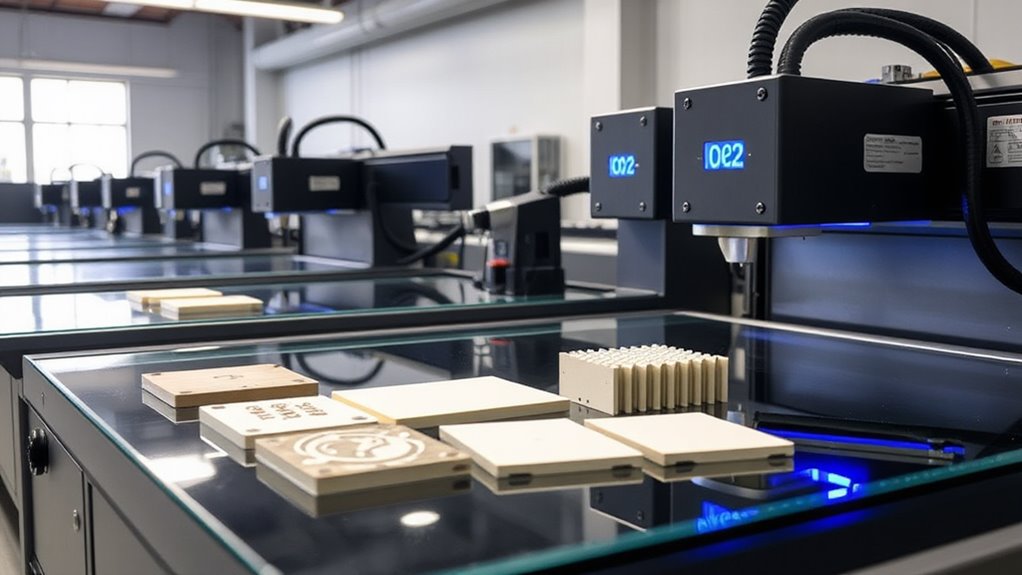
When you pick a CO2 laser, I start with budget and value and how well it fits your projects. I weigh power and material compatibility, bed size, speed, and precision to match what you’ll cut. Finally, safety and compliance matter, so I look for easy setup, clear manuals, and practical tips.
Budget And Value
Choosing a CO2 laser is about value, not just sticker price. Higher wattage machines cost more up front, but they can cut faster and raise throughput over time, which saves you money in the long run. Don’t forget the extras, like air assist pumps, rotary attachments, and exhaust systems, because they can push the budget higher than the machine alone. Some models add smart features like autofocus or smart cameras, and though they raise the price, they may save you time and boost precision. Think about consumables too, like laser tubes and lenses, since replacement costs add up across the machine’s life. A bigger work area also adds to cost, so match size to your project needs. That balance keeps beginners motivated and grows.
Power And Materials
Power and materials go hand in hand with cost and value, so I explain how watts determine what you can cut. When you choose higher wattage, you’ll usually cut faster and handle thicker material, making projects smoother. Acrylic needs power to shine, with about 45W cutting around 10 mm and 55W pushing toward 20 mm, so your choice matters for clean edges. Wood follows a similar rule, about 8 mm at 45W and up to 18 mm on woods like black walnut at 55W. Engraving glass or coated metals often needs at least 50W to look noticeable, and more power opens doors to leather, fabric, and even some ceramics. Power changes which materials you can process, from basics to advanced crafts. Your setup determines your next breakthrough.
Bed Size And Build
If you want to complete big projects smoothly, bed size matters. I look for a machine that can handle the largest pieces I plan to cut in one go, like 26 by 14 inches, instead of stopping halfway. A honeycomb bed helps with airflow and keeps designs flat, so material doesn’t warp as it’s cut. Some models have detachable bases or riser supports, which is handy for tall objects or tubes. An auto-passthrough system is a nice feature that lets long materials pass through the laser with automatic feeding. Bigger beds cost more and take up more space, so I weigh space, price, and how often I need large cuts. That extra flexibility helps me plan projects without surprises or delays.
Speed And Precision
Speed and precision go hand in hand, and they matter when you plan projects. When I choose a CO2 laser, I look for fast speed settings that still cut cleanly, because tiny mistakes slow me down. A machine with adjustable speeds lets me trace fine shapes and decide early if material needs scoring or multiple passes. I keep projects simple at first, and I test on scraps before committing. Clear lenses, good cooling, and stable beds help me stay accurate while I work. I also compare accuracy specs like kerf width and repeatability, then pick models that balance power and control. With practice, speed becomes steady, and precision feels rewarding. Stay curious, experiment often, and you will enjoy easy, accurate results on every project.
Safety And Compliance
As I plan projects, safety and compliance go hand in hand with speed and precision. CO2 laser cutters come in safety classes from Class 1 to Class 4, with access and risk changing at each level; I select a unit that fits my workspace and plans. Enclosed designs with an emergency stop and interlocks help keep curious fingers safe and prevent accidental operation. A proper exhaust system, rated in cubic feet per minute (CFM), pulls fumes and dust away to protect my lungs. I also use fire detection and suppression where appropriate, and flame-retardant materials to reduce fire risk when cutting flammable substances. Finally, I verify local safety standards and regulations to stay compliant and safe. This thorough checklist makes the hobby enjoyable and manageable.
Software And Compatibility
When choosing a CO2 laser cutting machine, I want software that feels intuitive and reliable. Clear icons, simple menus, and helpful hints help me finish a project without a headache. I value compatibility with popular file types like SVG and DXF, plus easy import from design apps I already use. A good setup should save presets for common materials so I don’t reinvent the wheel every time. Safety features matter too, such as confirm prompts before starting a cut, and quick adjustments for speed and power. Strong customer support and informative online resources keep me confident as I learn new tricks. With practice, this combination becomes a smooth, enjoyable part of making cool projects today.
Air Assist And Vent
From here, I want a setup that blends smoothly with your design workflow and keeps every cut steady. I love how effective air assist directs airflow at the laser point, reducing flare-ups and boosting cut quality. Exhaust systems with higher CFM remove smoke and fumes and keep the lens clear. Dual-cylinder air pumps provide stronger, more consistent airflow for cleaner cuts and engravings. Adjustable air assist lets you tune airflow by material and thickness, reducing fire risk and maximizing performance. Proper ventilation matters for safety and lens life, preventing fumes and residue buildup. Think of airflow like lighting a project: smooth and steady makes every detail pop, while you stay comfortable. Start with adjustable settings and a quick test pass to begin.
Aftermarket Support
Choosing a CO2 laser with solid aftermarket support keeps projects smooth and reduces stress. I look for a reliable parts network so replacements are easy to find and fast, minimizing downtime. Online forums and user groups help me troubleshoot common issues, sharing tips that save time and frustration. Complete manuals and software tutorials empower me to maintain and operate the machine without always needing help. I also value third-party suppliers for compatible components, which opens upgrade options and can lower costs. Access to repair services, whether from the maker or independent technicians, matters when a complex fix is needed. With solid support, creativity stays the focus and ideas remain alive, keeping projects enjoyable.
Frequently Asked Questions
What Maintenance Schedule Is Recommended for CO2 Lasers?
I recommend a regular schedule: I perform daily wipe-downs and safety checks; you handle weekly optics cleaning; monthly lens purging and mirror alignment; quarterly belt and blower checks; and tube replacement according to running hours. I document every task and update the maintenance log.
Can CO2 Lasers Cut Metal Without Coatings?
No, CO2 lasers don’t cut metal cleanly without special setup or coatings. For metal cutting, I’d use a fiber laser, or a high-power CO2 system with gas assist and suitable coatings, along with optimized feed rates.
What Safety Features Are Included by Default?
This system includes an emergency stop, door interlocks, an enclosed cabinet with interlocks, automatic laser shutoff when doors open, reliable ventilation, smoke and dust sensors, overheat protection, and fault indicators to keep you safe and in control.
Are Replacement Parts Readily Available Globally?
Yes, replacement parts are widely available globally. I’ve found reputable suppliers and distributors ship inserts quickly, and many manufacturers maintain networks, so you’ll usually find spares, accessories, and service support easily near you or online.
Do These Machines Require a Dedicated Exhaust System?
Yes, these machines typically require a dedicated exhaust system with proper ducting and filters. I recommend a robust fume extraction setup to vent vapors and smoke safely indoors or with certified ventilation.