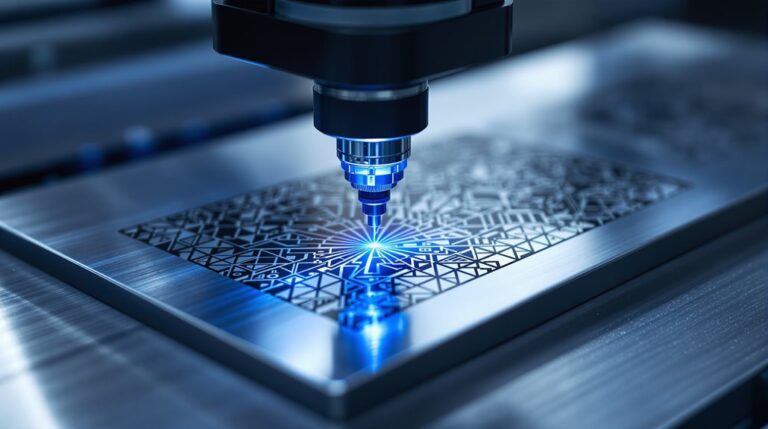
I’m excited to share how easy it can be to start with a laser engraver today, especially models like the Ray5, Carverall K15 Pro, and LaserPecker LP1 Pro that come ready to use.
It’s the easiest laser engraver to use, offering quick setup, clear software, and safety in one package, plus tips like using preloaded designs and simple material tests.
If you want fast results and fewer headaches, you’re in the right spot, and I’ve got ideas that might surprise you.
| Ray5 5W Laser Engraver with Touch Screen | Best All-in-One | Safety: Emergency shutdown, motion protection, overheating prevention, protective covers, goggles included | Connectivity: USB, TF card, WiFi, app control | Software compatibility: LaserGRBL, LightBurn | VIEW LATEST PRICE | Read Our Analysis | |
| Carverall K15 Pro 5W Laser Engraving Machine (200x300mm) |  | Large-Area Pro | Safety: Class 1 safety designation | Connectivity: CutLabX app, LightBurn, LaserGRBL | Software compatibility: LightBurn, LaserGRBL | VIEW LATEST PRICE | Read Our Analysis |
| LaserPecker LP1 Pro Laser Engraver for Beginners |  | Pocket-Sized Starter | Safety: Laser safety glasses, password lock, motion detection, 50% more safeguards | Connectivity: Bluetooth connection | Software compatibility: N/A | VIEW LATEST PRICE | Read Our Analysis |
| AlgoLaser 3W Smart Laser Engraver No PC Needed | No-PC Simplicity | Safety: Safety guard pauses/resumes operation, automatic tilt alerts, autonomous minor malfunction handling, safety goggles | Connectivity: Type-C, WiFi control, mobile remote, SD card input | Software compatibility: LightBurn, LaserGRBL | VIEW LATEST PRICE | Read Our Analysis |
More Details on Our Top Picks
Ray5 5W Laser Engraver with Touch Screen
If you want a beginner-friendly laser that’s easy to use, the Ray5 5W with a touch screen shines, especially for hobbyists who love quick results. I love how it packs 5W power and a precise 0.08mm laser spot, plus 0.01mm engraving accuracy, so small details look sharp. With a 400x400mm area, you can engrave wood, leather, stainless steel, acrylic, or glass, and you can control it via USB, TF card, or WiFi. Setup includes safety covers and goggles, and the 24/7 support team is friendly. It feels practical and fun to learn. You’ll get great results with easy guides nightly.
- Safety:Emergency shutdown, motion protection, overheating prevention, protective covers, goggles included
- Connectivity:USB, TF card, WiFi, app control
- Software compatibility:LaserGRBL, LightBurn
- Engraving area:400×400 mm
- Materials compatibility:Stainless steel, leather, metal, wood, glass, acrylic
- Setup / support:Tools included, detailed guides, 24/7 support, longer lab testing
- Additional Feature:240MHz ESP32 chipset
- Additional Feature:400x400mm area
- Additional Feature:Offline usage
Carverall K15 Pro 5W Laser Engraving Machine (200x300mm)
For beginners seeking simple setup and solid results, the Carverall K15 Pro delivers. I appreciate its 5W laser and 200x300mm workspace, which fits most small projects. Setup takes about 90 seconds and six screws, then I can start engraving many surfaces, from wood to leather. It cuts light wood up to 6mm and acrylic up to 3mm, with a precise 0.01mm accuracy. The CutLabX app runs well on Windows, Mac, and phones, and LightBurn is also compatible. It’s portable, durable, and backed by a US support team, making hobby work feel professional for curious makers like us everyday.
- Safety:Class 1 safety designation
- Connectivity:CutLabX app, LightBurn, LaserGRBL
- Software compatibility:LightBurn, LaserGRBL
- Engraving area:200×300 mm
- Materials compatibility:100+ surfaces; cuts 6 mm wood, 3 mm acrylic
- Setup / support:Portable design; quick setup; US-based support
- Additional Feature:Beltless design
- Additional Feature:15,000mm/min speed
- Additional Feature:IR laser upgrade path
LaserPecker LP1 Pro Laser Engraver for Beginners
The LaserPecker LP1 Pro is ideal for beginners who want a tiny, travel-friendly engraver you can take anywhere. It’s incredibly portable, palm-sized at 2.56 by 2.4 by 2 inches and weighing 190 grams, making it easy to carry to classes or friends’ homes. It delivers precise 0.15 mm detail and can etch pine, balsa, and plywood, with a 4×4 work area. Setup is fast: Bluetooth, 20 cm height, design upload, in about three simple steps. Safety includes glasses, a password lock, motion sensing, and ample protection. It remains affordable and durable, with templates and 24/7 support for curious beginners like you.
- Safety:Laser safety glasses, password lock, motion detection, 50% more safeguards
- Connectivity:Bluetooth connection
- Software compatibility:N/A
- Engraving area:4×4 (engraving area)
- Materials compatibility:Pine, balsa, plywood
- Setup / support:3-step setup; 5x faster; no experience needed
- Additional Feature:Palm-sized portable
- Additional Feature:0.15mm precision
- Additional Feature:Free engraving templates
AlgoLaser 3W Smart Laser Engraver No PC Needed
With the AlgoLaser 3W Smart Laser Engraver, you can start right away thanks to built-in AlgoOS, no PC needed. I love the 3.5-inch touchscreen for intuitive controls, and OTA updates keep it current. It can engrave on over 300 materials, which is perfect for hobbyists. Features include WiFi control, Type-C, and SD card input, plus safety that automatically pauses and resumes. LightBurn and LaserGRBL are compatible, so switching tools is easy. Portable, beginner-friendly, and great for gifts, signs, and school projects in my small workshop today.
- Safety:Safety guard pauses/resumes operation, automatic tilt alerts, autonomous minor malfunction handling, safety goggles
- Connectivity:Type-C, WiFi control, mobile remote, SD card input
- Software compatibility:LightBurn, LaserGRBL
- Engraving area:N/A
- Materials compatibility:300 materials
- Setup / support:Built-in OS; OTA updates; optional smoke purifier
- Additional Feature:Built-in AlgoOS
- Additional Feature:No PC needed
- Additional Feature:Exhaust system
Factors to Consider When Choosing the Easiest Laser Engraver to Use
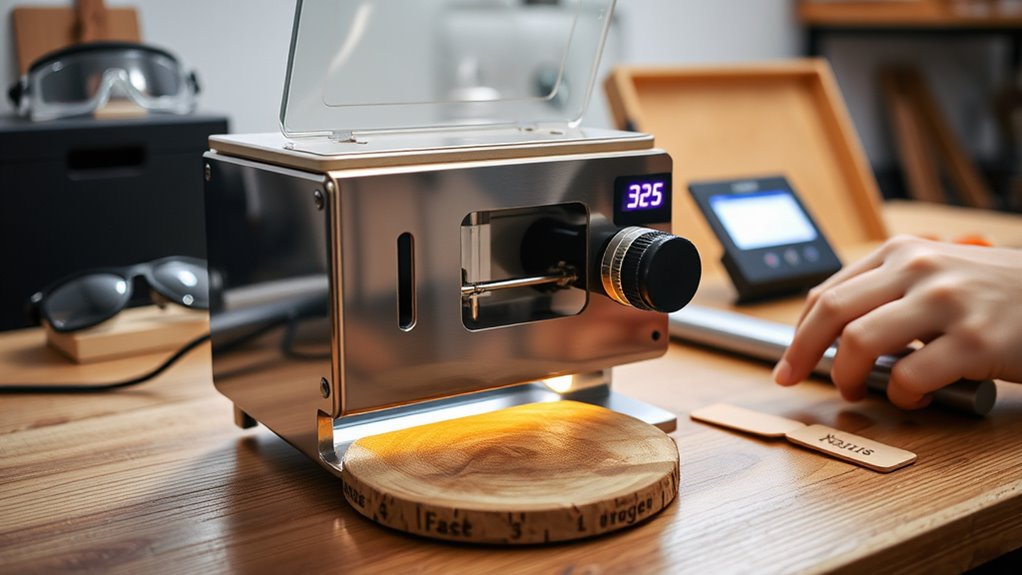
When choosing the easiest laser engraver, I consider setup time so you can start quickly. Safety features, software compatibility, and portability matter, because a user-friendly tool builds confidence. I also weigh engraving speed, since faster projects stay fun and are easier to finish after school.
Setup Time Requirements
Getting a laser engraver ready is often easier than it sounds, especially with quick setups. I’ve found that setup time ranges from under 90 seconds for models that require six screws for complete assembly, to longer times when parts are more complex. Engravers with pre-assembled components and simple alignment feel faster, and I appreciate those designs. Some models offer automatic height setting, so I don’t have to manually calibrate every time. Software installation can add time, especially if you rely on PC programs, but many makers include friendly drivers and quick connection steps. Portable mini engravers usually set up quicker because they have fewer parts and simpler pieces. With a little planning, you can turn setup into a smooth, enjoyable part of the project.
Safety Features Included
Safety features are a smart focus for hobby sessions to stay fun and worry-free. I look for lid switches, auto shutoff, and a clear enclosure for protection. A strong power switch helps me shut it off quickly when needed, reliably. Cool and quiet operation lets me finish projects without heat or noise distraction. Stable bases and non-slip feet prevent wobbling. Protective covers keep fibers away, and lens guards reduce risk. If it overheats, I want a gentle reminder rather than a ruined project. Clear manuals and simple labels help new users learn faster and feel prepared. Bottom line: safety features let me focus on ideas, not hazards, every time. You can enjoy it and learn together.
Software Compatibility
Choosing an easy laser engraver starts with software that fits how you like to design. I look for programs that send my ideas smoothly to the machine, whether I use simple drag-and-drop or careful tuning. Some software feels beginner-friendly, while others offer advanced customization for more control. Engravers that work with both LaserGRBL and LightBurn give me flexibility, since these are common and easy to learn. Direct operation through built-in systems also helps, because I can skip extra apps when I want quick results. Mobile apps are a plus, letting me design on the go and upload files without a PC. That means less setup, more making, and a better chance to finish great projects today.
Portability And Size
Portability matters to me, so I look for compact machines that still leave room to grow. I target about a 200 by 300 millimeter engraving area, which feels like a near A4 workspace. Larger but still manageable options around 400 by 400 millimeters give more room for projects and help keep a home shop tidy. Beltless designs help reduce space, so the machine fits on a desk or cart. Some portable engravers skip a dedicated exhaust, so I plan for ventilation in the room. Even palm-sized gadgets under 200 grams exist and spark ideas for tiny projects. If you’re choosing, balance size with usable area and think about future upgrades. Remember, some devices lack built-in exhaust, so a ventilated workspace helps for beginners.
Engraving Speed Benefits
Engraving speed isn’t just about pushing limits; it helps you finish projects faster and stay inspired. Faster engraving makes a hobby feel like a game with clear milestones. When a design is simple, you can switch themes and complete it in one sitting. That momentum keeps you experimenting, which leads to better ideas and fewer unfinished projects.
Look for machines with steady ramping, clear presets, and easy resume options. A modest speed setting can still produce neat lines, while faster modes save time. I keep a small timer and a sample project to test each unit. Prioritize reliability first, then balance it with speed that fits your schedule. With the right setup, engraving feels smooth, predictable, and oddly satisfying. You can tackle real projects at home.
Material Compatibility Range
Material compatibility matters a lot when choosing the simplest laser engraver. Not every machine cuts or marks every material in the same way. Some models produce clean lines on wood and acrylic but struggle with anodized metals or dark plastics. I look for a machine that works reliably across a broad range, including plywood, cork, leather, and certain plastics. Check the laser wattage, supported materials, and whether masks or coatings are required. Also consider bed size and how easy it is to swap materials between jobs. For beginners, a versatile starter kit with beginner-friendly presets is very helpful. Ask sellers about tested materials, and start with simple projects to learn quickly and have fun.
Control Interface Simplicity
Choosing an easy-to-use laser engraver starts with the control interface you prefer, because a friendly screen saves time. I tell friends that touch-screen controls let me see settings as I adjust them, so the learning curve drops fast. Some engravers have built-in operating systems, which means you can start engraving without a PC, handy for quick projects. Others let you control from a mobile app, so you can check progress while you work. Automatic version detection and over-the-air updates keep the software smooth and reliable, with less guessing. Plus, interfaces in multiple languages help everyone feel welcome and confident. If a model offers easy setup prompts, I can jump in without shouting for help.
Support And Documentation
If you want the easiest laser engraver, strong support and clear documentation can make a big difference. I encourage new users to rely on thorough guides and troubleshooting steps to shorten the learning curve. 24/7 support is valuable when you encounter issues during setup or a project, and it brings peace of mind. Manufacturers often share test results for different materials to help you decide on power and speed. Free engraving templates and ready-made projects speed up your first craft. Community forums are excellent for tips and fixes, and peers can share shortcuts. With these resources, your hobby stays fun and doable. I want you to feel confident starting small weekend projects at home.
Frequently Asked Questions
What Safety Features Exist Beyond Basic Goggles?
Beyond goggles, safety measures include laser enclosures with interlocks, an integrated emergency stop, proper ventilation with HEPA filtration, smoke detectors, and automatic fire shutdown, along with laser-class safety features and interruption sensors that cut power if lids are opened.
Can It Operate Wirelessly Without a PC?
Yes, it can operate wirelessly without a PC by using built-in Bluetooth or Wi‑Fi in standalone mode. For some models, you may still need to transfer designs via USB or SD card depending on the firmware.
What Maintenance Is Required Monthly?
Monthly maintenance tasks I perform include cleaning optics, inspecting belts, lubricating guide rods, replacing air filters, tightening fasteners, checking fans, and running a test pattern to verify alignment and airflow. I also wipe lenses gently and log the results.
Do These Support Vector Engraving or Just Raster?
Yes, these devices support vector engraving in addition to raster. You can outline vectors and fill areas, though some models process vectors faster. If you plan contour work, check software compatibility and power limits.
Are Spare Parts Readily Available and Affordable?
Yes, spare parts for common brands are readily available and affordable, and replacements are usually easy to find. For less popular models, parts may cost more and take longer to obtain, but alternatives and compatibles are often available.