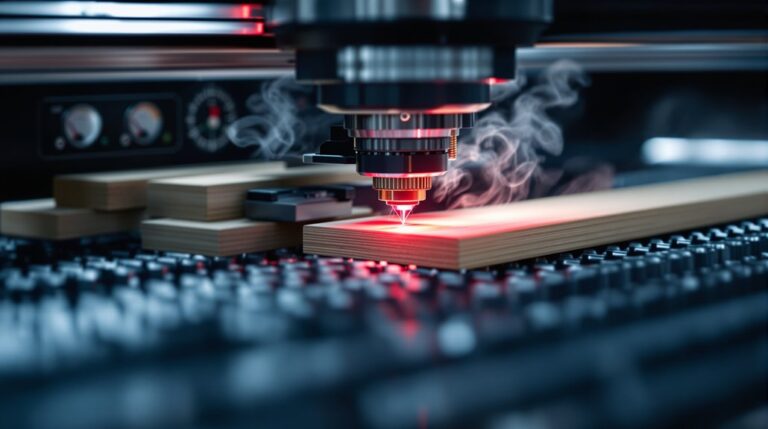
I’m exploring the best laser cutter kit for makers like us, from the ACMER S1 and T1’s portability to the Creality Falcon’s 10W power and rotary kit.
I’d start with your space, check the work area, and confirm file formats like NC, DXF, and PNG work with your software.
Safety matters too, with enclosed systems and emergency stops.
Curious how these kits fit your projects, and what you’ll try first? Let’s compare.
| ACMER S1 Laser Engraver 6000mW 130x130mm | Highest Power | Type: Laser engraver | Power: 6000mW | Engraving Area: 130x130mm | VIEW LATEST PRICE | Read Our Analysis | |
| T1 3000mW Foldable Laser Engraver 200x150mm |  | Best Portable | Type: Laser engraver | Power: 3000mW | Engraving Area: 200x150mm | VIEW LATEST PRICE | Read Our Analysis |
| Creality Falcon 10W Laser Engraver with Rotary |  | Professional-Grade | Type: Laser engraver | Power: 10000mW | Engraving Area: N/A | VIEW LATEST PRICE | Read Our Analysis |
| MiniInflat 253-Piece Laser Engraving Material Kit |  | Starter Material Kit | Type: Laser engraving material kit | Power: N/A | Engraving Area: N/A | VIEW LATEST PRICE | Read Our Analysis |
More Details on Our Top Picks
ACMER S1 Laser Engraver 6000mW 130x130mm
The ACMER S1 is a great pick for hobbyists who want serious power in a small setup, because its 6000mW laser can cut thin materials and engrave with sharp detail. This compact unit offers a strong output and a 130 by 130 millimeter work area, so I can work on small projects without clutter. It runs fast at 10,000 millimeters per minute and delivers repeatable accuracy, so patterns stay neat. I love the 2-in-1 engraving and cutting, plus easy software like AcmerTool and LightBurn. Tip: start with plywood, then try leather or acrylic. Have fun making today.
- Type:Laser engraver
- Power:6000mW
- Engraving Area:130x130mm
- OS/Software Support:AcmerTool, LightBurn, LaserGRBL; macOS/Windows/Linux
- Safety:Class 4 laser; IEC 60825-1
- Ready-to-use / Assembly:99% preassembled (1-minute laser head install)
- Additional Feature:Portable design
- Additional Feature:12-month warranty
- Additional Feature:Industrial-grade aluminum alloy
T1 3000mW Foldable Laser Engraver 200x150mm
The T1 3000mW Foldable Engraver is a perfect starter tool for portable projects. It’s ready out of the box—pre-assembled and calibrated—so you can start creating tonight. The 200x150mm working area fits small wood pieces, acrylic scraps, and coated metal samples, helping keep mistakes low and success high. Safety is simplified with included goggles and a laser cover, so everyone stays protected while learning. You can engrave wood, leather, paper, and fabric, making gifts and decor easy. This kit helps beginners build confidence quickly, and the foldable setup makes it easy to take anywhere.
- Type:Laser engraver
- Power:3000mW
- Engraving Area:200x150mm
- OS/Software Support:N/A
- Safety:Built-in protective cover; safety goggles included
- Ready-to-use / Assembly:Pre-assembled, calibrated
- Additional Feature:Foldable, portable design
- Additional Feature:Safety goggles included
- Additional Feature:Pre-assembled and calibrated
Creality Falcon 10W Laser Engraver with Rotary
Packed with a 4-in-1 rotary kit, this laser makes bottles, mugs, and cylinders easy to decorate. I test it on wood and acrylic, watching the 0.06 mm spot carve clean edges at high speed. It feels powerful yet friendly, with a 10,000 mW output and a safety focus like an emergency stop and UV filter. The external clamping fits cylinders from 1 to 110 mm, and the air assist keeps smoke down while boosting cut quality. It runs LaserGRBL or LightBurn, plus offline TF cards for quick project ideas, and guides you with simple, clear tips. I like that it engraves paper and urethane foam too, and the rotary handles small crafts smoothly, turning doodles into keepsakes everywhere.
- Type:Laser engraver
- Power:10000mW
- Engraving Area:N/A
- OS/Software Support:LaserGRBL, LightBurn; Windows/macOS
- Safety:Safety features (emergency stop, active stop, buzzer alert)
- Ready-to-use / Assembly:Ready-for-use (implied)
- Additional Feature:4-in-1 rotary roller kit
- Additional Feature:Air assist system
- Additional Feature:Offline TF card workflow
MiniInflat 253-Piece Laser Engraving Material Kit
For beginners and pros alike, the MiniInflat kit serves as a ready-to-use material vault. It includes 253 laser-friendly materials in one box, saving trips to the store. It features 26 items crafted from nine materials: acrylic, PU leather, canvas, wood, metal, fabric, rock, glass, and rubber. There are blanks for rings, necklaces, and bracelets, ideal for jewelry projects. The kit is durable and reliable, making it great for gifts or home decor. It ships with clear specifications and a helpful warranty, so you can start right away. Model number SIR-MiniInflat-2021. Dimensions: 15.75 by 11.81 by 6.5 inches. Nice detail.
- Type:Laser engraving material kit
- Power:N/A
- Engraving Area:N/A
- OS/Software Support:N/A
- Safety:N/A
- Ready-to-use / Assembly:N/A (kit)
- Additional Feature:253-piece material kit
- Additional Feature:Includes ring blanks
- Additional Feature:Multicolor assortment
Factors to Consider When Choosing a Laser Cutter Kit
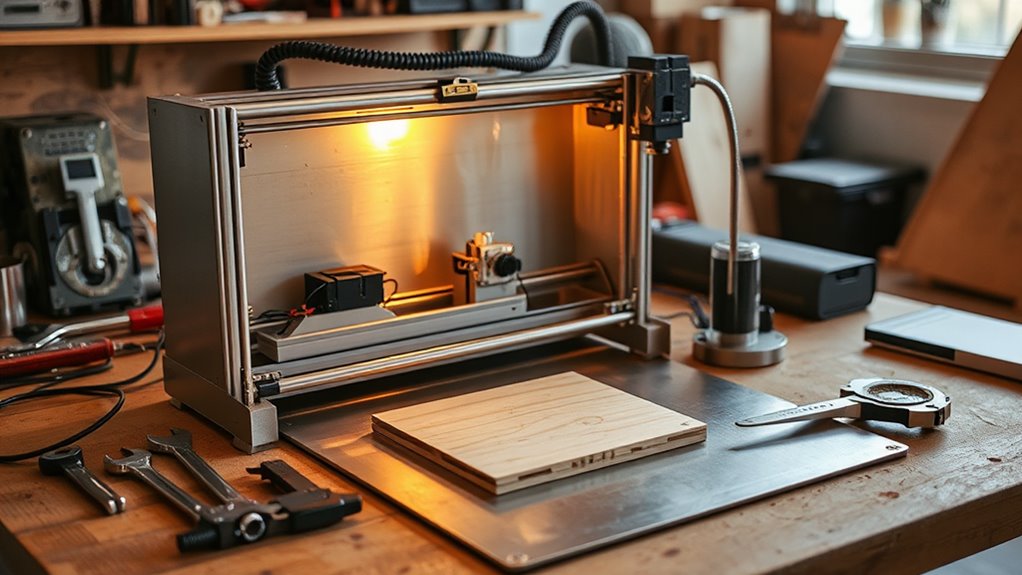
When choosing a laser cutter kit, I start by evaluating laser power and its ability to cut or engrave thicker materials. I also consider the working area, software compatibility, safety features, and how easy it is to transport and assemble. Like you, I want a kit that fits my space, includes clear setup guidance, and can grow with my projects.
Laser Power Considerations
Choosing the right laser power means matching what you plan to cut to what the machine can handle. Start with simple tasks, like drafting decorative tags or small wooden coasters, before moving to thick acrylic or plywood. Lower power preserves blades and reduces heat buildup that can warp materials. For clean cuts through thin material, a modest setting with slow passes often works best. For thicker pieces, you may need higher power, multiple passes, or a larger beam, and be prepared for longer cut times. Begin with factory presets and test on scrap material to dial in speed and power. Keep a log of effective settings so future projects go faster. Experimenting is rewarding, and small wins build confidence.
Working Area Size
Sizing the bed matters after power choices, because bigger jobs need room to breathe. When I look at the working area, I treat it like a workspace for ideas. A larger bed lets me cut longer banners, bigger signs, or thicker wood sheets without rehauling parts. If your projects are mostly small crafts, a compact bed saves space and keeps costs calm. I check both width and depth, not just one number, so I can plan setups and clamps easily. Remember to think about material margins and future projects. You’ll get smoother results when you measure clearance for lids, hoses, and airflow. Ask yourself where the machine will sit and how often you clean the vents between uses.
Software Compatibility
If you want a smooth ride with your laser cutter, start by checking software compatibility. I look for machines that read common files like NC, DXF, BMP, JPG, and PNG, so I can use my favorite designs without fuss. Some cutters work with several packages, which is great for flexibility—maybe LaserGRBL today and LightBurn tomorrow. I also check which operating systems they support, since I use macOS, sometimes Windows, and occasionally Linux. Software that taps into multi-core processors helps my edits move faster, saving time on big projects. Offline work matters too, because TF cards let me cut without always staying near a computer. That mix keeps the hobby simple, fun, and ready for quick DIY success today.
Safety Features
Safety features matter from day one, and I always check them before buying. When I look at a laser cutter kit, I favor Class 4 machines that have strict safety measures to prevent eye or skin damage from direct or reflected beams. I also want an emergency stop button that halts operation instantly if something goes wrong. Enclosed systems and protective covers are a big plus because they help contain radiation and any particles during use. Active stop functions are clever too, pausing the laser if the machine tips, flips, or experiences a sudden drop. Anti-UV filter acrylics are nice because they reduce harmful ultraviolet light. Small details, big peace of mind for makers like us. I teach friends to check these features too.
Portability And Assembly
Portability and setup matter because I want a laser cutter kit I can move between desks and fit in my space. Some kits are lightweight, around 2 kg, while others weigh up to about 4.4 lb, making transport easier. Many models hide clutter with compact, foldable designs that save room and let you relocate them. Some are nearly preassembled for quick setup, so you can start crafting sooner. Dimensions like 250 x 250 x 162 mm or 17.09 x 8.7 x 6.18 inches help ensure it fits in a small area. A kit is more portable when its assembly is DIY-friendly and compact, easy to move between projects. Pack a small toolkit, check weight limits, and choose foldable models for storage between sessions. It’s simple, friendly, and keeps your workspace tidy.
Frequently Asked Questions
How Do Safety Features Vary Across Different Laser Kits?
Safety features vary widely. Some kits include interlocks, lid switches, and enclosure sensors; others rely on user discipline. I look for automatic shutoff, emergency stop, burn prevention, and clear instructions to minimize accidents and injuries.
Can These Kits Cut Metal or Only Wood/Plastic?
These kits cut wood and plastic, not metal. CO2 systems struggle with metal unless specialized; for metal, I’d point you toward a fiber laser or metal-cutting device, not a kit.
What Cooling Methods Do Entry-Level Laser Kits Use?
Entry-level laser kits typically use air cooling, while some higher-powered or CO2 models employ water cooling. Check your specific model’s specs, because cooling methods vary and impact maintenance, performance, and safety.
Are Replacement Parts Readily Available Globally?
Yes, replacement parts are widely available globally, though availability varies by brand. I can typically source them from official distributors, authorized repair centers, or reputable third-party suppliers worldwide, with shipping options and lead times disclosed up front.
Do These Kits Require Professional Assembly or Can Beginners Manage?
These kits are beginner-friendly and largely DIY. With basic tools, most parts can be assembled by beginners. Some steps may require patience or a little extra help, but professional assembly isn’t typically needed for entry-level models.