You’re figuring out How Much to Charge for Laser Engraving in 2026, and that’s doable.
Start by listing your costs, from materials to setup time, then pick a simple pricing model like hourly or per minute.
Be transparent with quotes and add small buffers for waste and rush work.
For tumblers and pendants, use clear examples and bulk discounts, and stay flexible as rates change, because the next order could surprise you.
Understanding Your Cost Structure
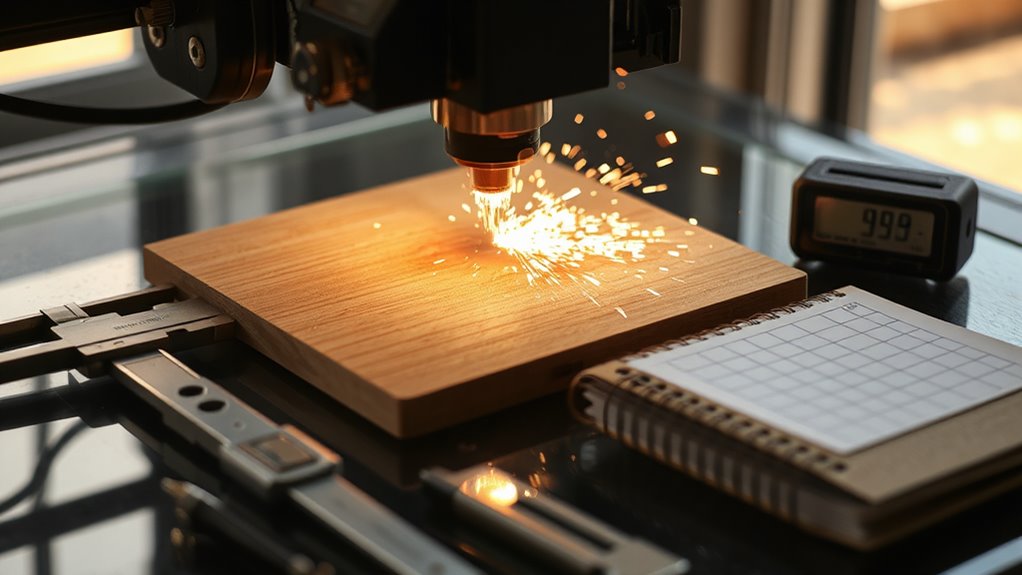
Understanding your cost structure helps you price fairly and still enjoy the craft. You’ll split costs into fixed costs and variable expenses, keeping pricing honest and simple. Fixed costs stay the same each month, like rent, software, and machines, even if projects pause. Variable expenses change with demand, such as materials, electricity, and upkeep per job. Track time and materials carefully, then add a small buffer for waste and mistakes. With clear numbers, you decide fair prices and still enjoy weekend projects. Remember, you can grow your skills while keeping profits transparent for every curious customer who asks today. Routine maintenance tasks like lens cleaning and rail lubrication typically take 1-2 hours monthly to ensure optimal machine performance.
Choose Your Pricing Model: Hourly vs Per Minute
When you choose between hourly and per-minute pricing, you’re turning your cost structure into a simple plan customers can follow. This choice affects rate selection and project estimation, so pick what fits your work style and the project. Hourly stays steady for large jobs, while per-minute pricing makes small tasks feel fair and precise. For beginners, try a blended approach: set a base hourly rate plus a per-minute rate for extras. Keep a simple calculator, track time, and adjust after a few projects so your margins stay healthy. Remember, pricing should be friendly yet accurate for steady growth. High-speed engraving models like the xTool F1 can significantly reduce project time, boosting profitability under engraving speed up to 4000 mm/second.
Build Transparent Quotes: Add-Ons and Final Formulas

To win trust, lay out add-ons and final pricing upfront so clients see value. When you build a quote, show every extra clearly, setup fees and rush charges included, so there are no surprises. Your final price should reflect true costs plus transparency. Here are handy add-ons you can use:
1) Rush charges for tight deadlines
2) Setup fees for special setups or finishes
3) Optional proofs or revisions before final engraving
Keep explanations short, give concrete examples, and maintain a friendly tone. This helps you come across as confident, fair, and approachable, turning a hobby into a trusted service customers love to share.
Materials and Time: Accurate Labor and Material Buffers
If you want fair prices, start by buffering both materials and time with simple, practical rules. Set a waste allowance of 5 to 15 percent on materials to cover scrap and small mistakes. Keep time estimation honest by logging setup, engraving, and cleanup in one smooth session. Track every minute, then add a small buffer for tool wear or delays. With clear buffers, you price fairly and still enjoy the craft. Examples help, such as a keychain set needing 20 minutes plus 5 minutes cleanup, plus 10 percent waste. This approach keeps friends happy and doors open for more orders.
Pricing Examples by Product: Tumblers, Jewelry, and Bulk Orders

Pricing by product helps you tailor quotes for tumblers, jewelry, and bulk orders. You can use market research to spot trends and competitor analysis to set fair, attractive prices. By product, consider these examples:
- Tumblers: a simple design might cost $25–$40, with add-on options pushing higher.
- Jewelry: pendants can range from $20–$60, depending on metal and finish.
- Bulk orders: 50 units at $20 each saves buyers and grows your order size.
Keep it friendly, practical, and transparent, so customers feel confident. Your hobby becomes a smart, enjoyable business, ready to scale. Share samples, track profits, and celebrate small wins together.
For intricate jewelry work, using a kit with a 4-in-1 rotary roller kit can improve precision and expand design possibilities.
Frequently Asked Questions
How Should I Handle Installation or Setup Fees for Customers?
Charge an on-site setup fee for complex designs, clearly itemized in the quote and linked to travel time, labor hours, and equipment checks. Offer optional rush or remote setup as alternatives to reassure customers while protecting margins.
Should I Offer Refunds for Engraving Mistakes or Defects?
Yes, you should offer refunds for engraving mistakes or defects. Ensure policy clarity and establish a damage assessment process with timelines, required evidence, and available remedies such as re-engraving, replacement, or full or partial refunds based on the severity.
What Tax Considerations Apply to Engraving Services?
You must collect sales tax on taxable engraving services and assess any applicable excise taxes for specific items. Register for a sales tax permit, file periodic returns, track exemptions, and keep detailed records to stay compliant and avoid penalties.
How to Price Reworks or Corrections After Initial Run?
For reworks, apply an updated hourly rate for the extra time, plus the cost of any new materials. Clearly communicate turnaround times and any rush fees, and consider batching revisions to protect margins from unexpected losses.
How to Price Non-Standard Materials or Unusual Substrates?
Price non-standard materials by conducting material testing, then adjust the quote accordingly. Perform material testing comprehensively, covering all setup and finish challenges, and apply quote adjustments for waste, returns, and tooling. Communicate transparently about risks and timelines.
Conclusion
You’re ready to begin laser engraving with clear plans and costs guiding you today. Start with a quick setup fee, then add per minute rates for engraving time, clearly. Always present a transparent quote with options, rush charges, and revisions to avoid surprises. Maintain a waste buffer of five to fifteen percent, plus time for cleanup sessions after finishing. Include clear examples for tumblers and pendants to build confidence and keep customers satisfied.